
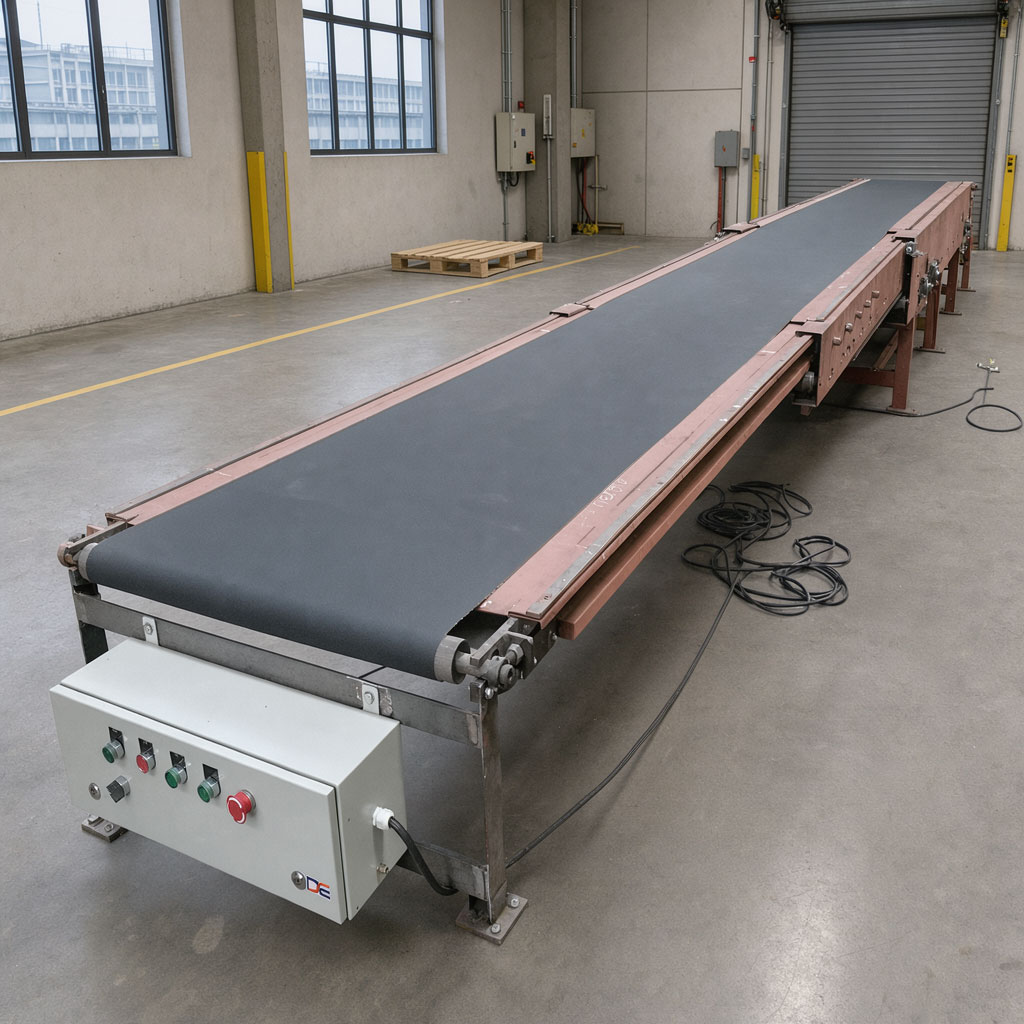
Truck Loading Conveyors: How Telescopic Belts Save Time and Manual Effort
Every dispatch team knows this scene. A truck arrives, and workers start carrying bags or cartons one by one, deeper and deeper into the body. Each trip gets longer and heavier. The truck waits, the driver waits, and the next order waits too.
A truck loading conveyor fixes this problem. The most popular type is the telescopic belt conveyor. It reaches into the truck, so your people stop walking and start placing.
What is a truck loading conveyor?
A truck loading conveyor is a machine that carries goods from your dock or warehouse straight into a truck, trailer or container. It works in reverse too, for unloading.
You may also hear it called a telescopic conveyor, a boom conveyor or a truck loader.
What is a telescopic belt conveyor?
It is a belt conveyor built in sections that slide inside each other, like a telescope. The moving part is called the boom. The boom can be short when parked and long when it goes into the truck.
The belt runs along the full length of the boom, and the goods ride on top.
How does a telescopic belt conveyor work?
For loading:
- The boom extends to the far end of the truck.
- Workers place bags or cartons on the belt near the dock.
- The belt carries them to the end of the boom, where one or two workers stack them.
- As the truck fills, the boom pulls back, so the stacking point is always close.
For unloading: the steps run in reverse. The boom goes in and pulls goods out, and the belt carries them to the dock.
How does it save time?
- No long walks. The belt does the carrying, so workers stay at one spot.
- Steady flow. Goods move one after another without waiting for someone to come back.
- Faster turnaround. Trucks leave sooner, which helps dispatch and reduces waiting charges.
- Less delay from tiredness. People slow down after hours of heavy carrying. A belt does not.
How does it reduce manual effort?
- Workers no longer carry every piece across the truck floor.
- Fewer people are needed in the hot, cramped space inside the truck.
- Lifting and bending reduce, so the risk of back strain and injury is lower.
- Goods are placed, not thrown, so there is less damage.
Manual loading vs telescopic belt
Point | Manual loading | Telescopic belt conveyor |
Carrying distance | Long, and it grows as the truck fills | Very short |
Workers needed | More | Fewer |
Speed | Slows down during the shift | Steady |
Physical strain | High | Low |
Damage to goods | Higher chance | Lower chance |
Works for many trucks | Yes, but tiring | Yes, and can be moved between bays if mobile |
What can you load with it?
Telescopic belts are commonly used for cartons, bags, boxes and packed goods. The right belt type and design depend on the size, weight and shape of your product, so always share these details with the manufacturer.
Who uses truck loading conveyors?
- Warehousing and logistics
- Agriculture and food, for bagged products
- Bulk handling and packing plants
- Any plant with heavy daily dispatch
Our telescopic truck loading belts
Dhanvanthri Engineers makes telescopic truck loading belts that add an extra set of pulleys, which push out and pull back the boom. Here are the options:
- Belt width: 500 mm to 800 mm
- Boom length: from closed length (3-5 meter) up to 3 times of its length
- Operation: manual or mechanised
- Belt options: PVC green or PU
- Frame options: mild steel or stainless steel 304
Every system can be customised to your dock, truck size and product.
How to choose the right truck loading conveyor
Ask yourself these six questions:
- What are you loading? Size, weight and type of pack.
- Which vehicles? Small trucks, long trailers or containers. This decides the boom length.
- How much per hour? Your dispatch volume decides belt width and speed.
- Fixed or mobile? A fixed unit suits one bay. A mobile unit can serve several bays.
- How much space and power do you have? Check floor space, dock height and power supply.
- Manual or mechanised? Mechanised operation saves more effort for busy docks.
Frequently asked questions
What is a telescopic conveyor used for?
It is used to load and unload trucks, trailers and containers.
How far can a telescopic belt conveyor extend?
It depends on the design. Our booms can extend up to 1.75 times their closed length.
Can the same conveyor load and unload?
Yes. The belt can run in both directions, so one machine can do both jobs.
What is a boom conveyor?
It is another name for a telescopic conveyor. The boom is the part that reaches into the truck.
Can it be made for my plant?
Yes. Belt width, boom length, belt material and controls can be matched to your needs.
Ready to load trucks faster?
Send us your product, pack size, weight and trucks per day. Our team will suggest the right telescopic belt for your dock. Dhanvanthri Engineers has built material handling systems for more than 40 years.