
Beyond the Barrel: Why Manual Drum Handling is a Brand Risk in 2026
In the Lubricants and Specialty Chemicals industry, the 200L drum is more than just a container it is a mobile billboard for your brand. Yet, in many Indian plants, the way these drums move from the warehouse to the filling line is often the most neglected part of the process.
As an engineering team that has audited hundreds of “Flow Logics,” we’ve identified three specific bottlenecks that occur when you rely on manual labor or basic “steel-only” conveyors.
1. The Aesthetic Leak: Protecting Brand Identity
To an end-customer, a scratched or dented drum suggests a lack of care. Manual dragging or using basic gravity rollers without “soft-start” logic creates metal-on-metal friction that destroys paint.
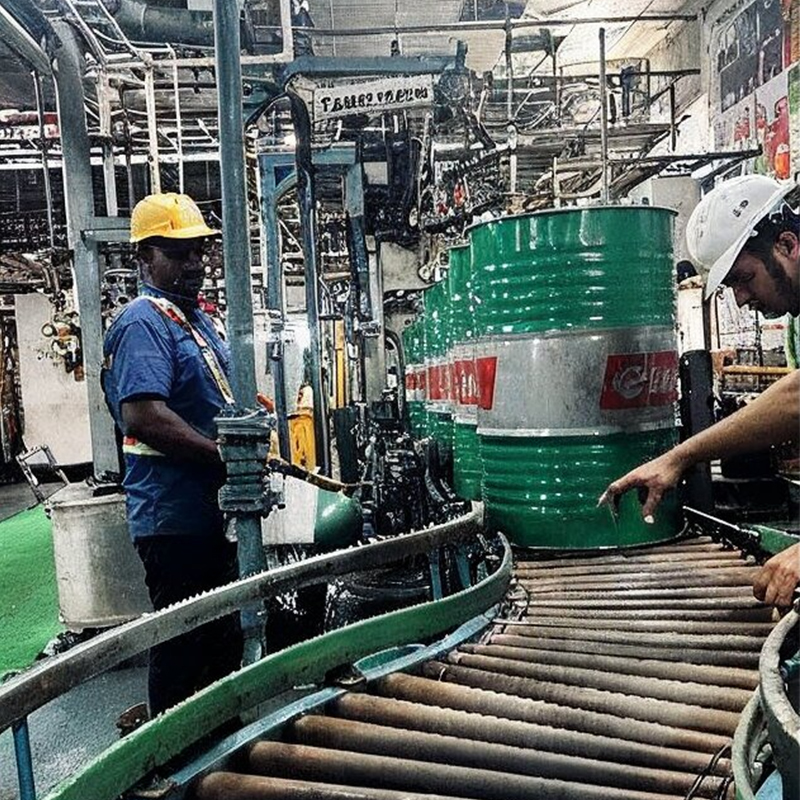
Precision at the curve: Our radius roller system designed for global leaders like Castrol ensures heavy drums transition smoothly without scuffing the brand’s aesthetic.
The Expert View: Look at the curve in the photo above. This is where most bottlenecks happen. If the rollers aren’t precision-aligned, drums “shudder,” leading to energy waste. By using Motor Driven Rollers (MDR), we ensure a “Soft-Start” logic that keeps the flow seamless and the drums pristine.
2. The Throughput Gap: Synchronizing the "Choke Point"
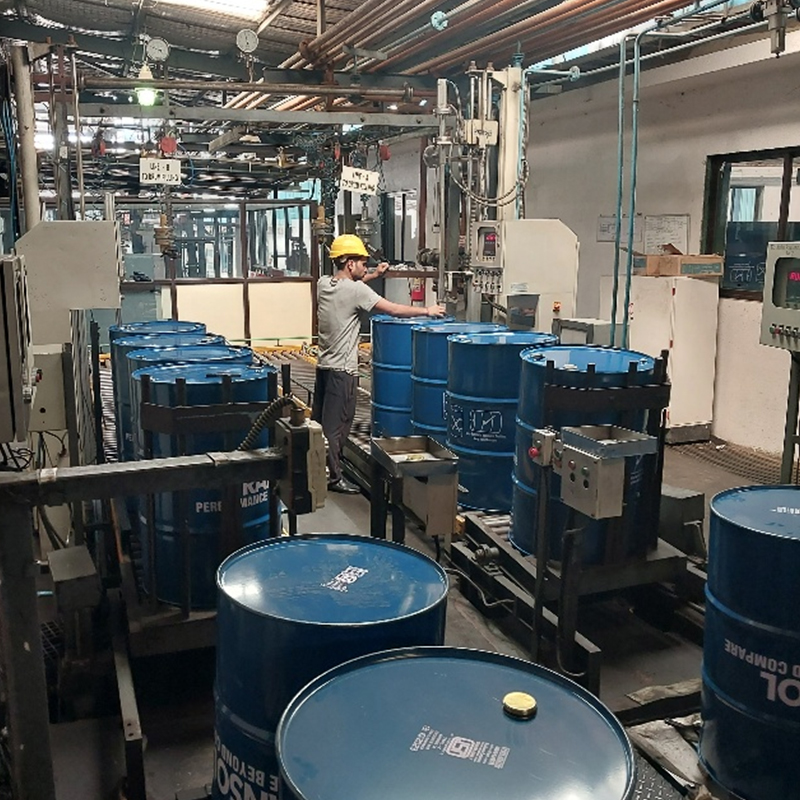
The most expensive machine in your plant is your filling line. If it sits idle for even 2 minutes because a manual worker couldn’t fetch a drum in time, your OEE (Overall Equipment Effectiveness) drops instantly.
High-density synchronization: Managing parallel lines at an Ansol facility to ensure the filling station never runs empty.
3. The Vertical Waste: Reclaiming your "Air Space"
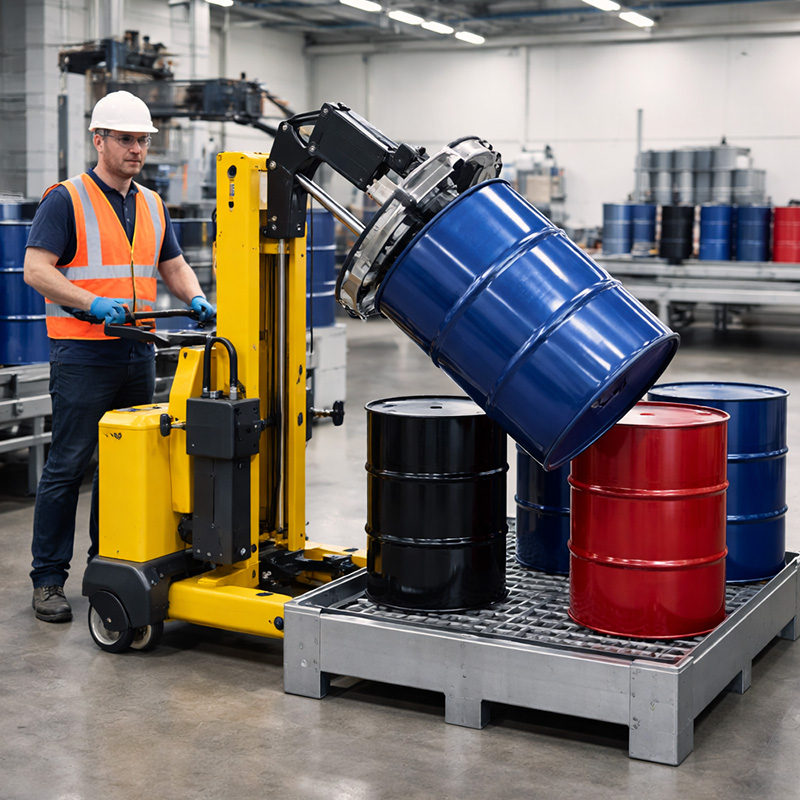
In industrial hubs where land is expensive, storing 300+ drums on the floor is a financial mistake. Most warehouses use only 40% of their Volumetric Space.
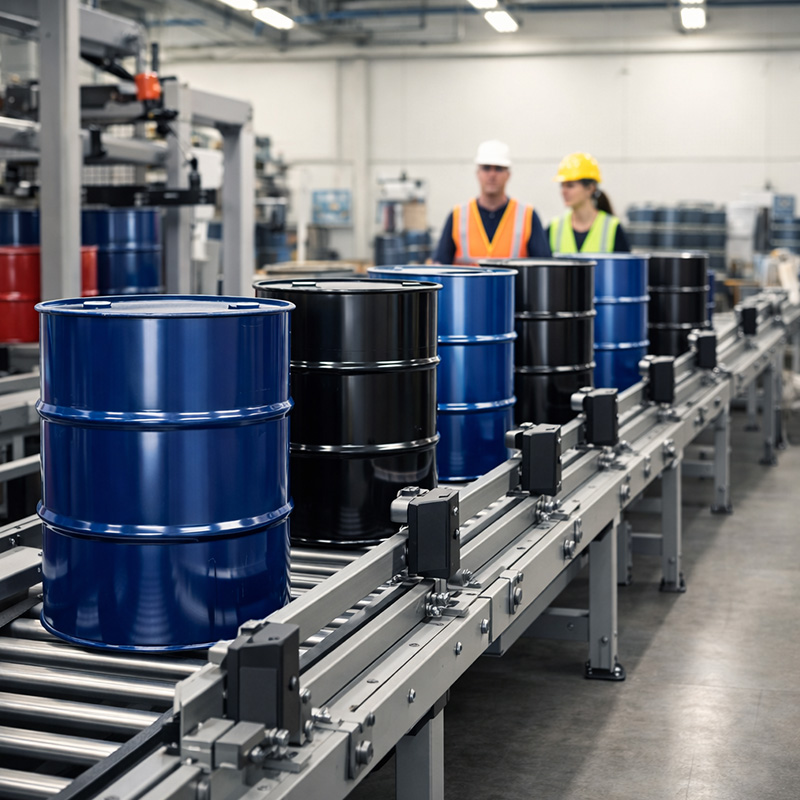
By using Sloped Feeding Rollers and Vertical Transports, you can stack your “Ready-to-Fill” inventory vertically. This clears your floor for safer operator movement while doubling your on-site storage capacity without adding a single square foot of land.
Logic is the New ROI
After executing 8,000+ projects across 18+ countries, our conclusion is simple:
Steel is easy to procure, but the Logic of Flow is hard to design.
Whether you are handling fragile 200L painted drums or bulk raw materials, the goal is the same: Maximum OEE with Minimum Intervention. In 2026, don’t just “move” your material. Engineer its journey.
Is your warehouse layout protecting your brand or hurting your margins? Let’s conduct a Throughput Audit.